How to Create a Log File for msi Installer
Here are the steps for creating a log:
1. Find out the path of the MSI file, for example C:\MyPackage\eB Director (x86).msiScreenshot no longer available from its original source.
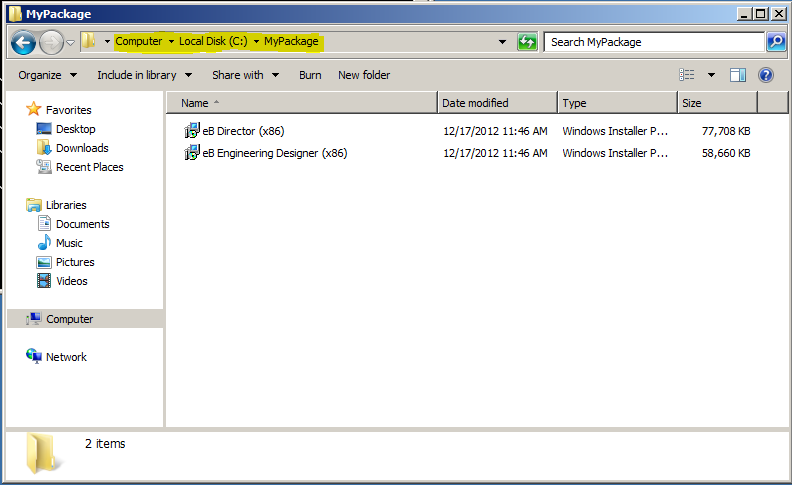
2. Decide the path of the log, for example C:\MyLog\example.log
Screenshot no longer available from its original source.

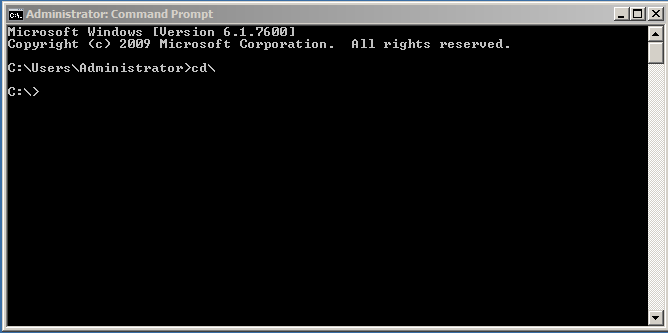
3. Open cmd.exe (you can use any command shell)
Note: In the command prompt if you are on the path ‘C:\Users\Administrator’ ,then make sure you come to the root directory i.e. C: ,use command “cd\ or cd..” to go to root directory.
Screenshot no longer available from its original source.
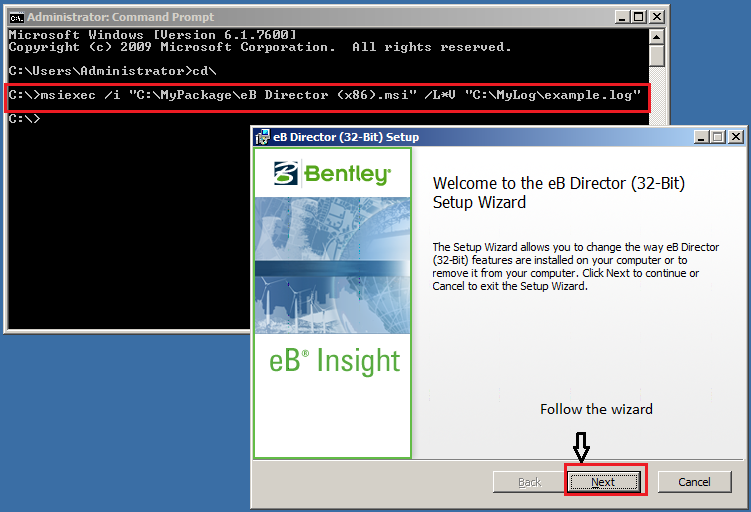
4. Use the msiexec command line to launch the MSI with logging parameters. Execute the following command by specifying log's complete path:
msiexec /i "C:\MyPackage\eB Director (x86).msi" /L*V "C:\MyLog\example.log"
If you want the log to be created next to the MSI, you can specify only the name of the log file:
msiexec /i "C:\MyPackage\eB Director (x86).msi" /L*V "example.log"
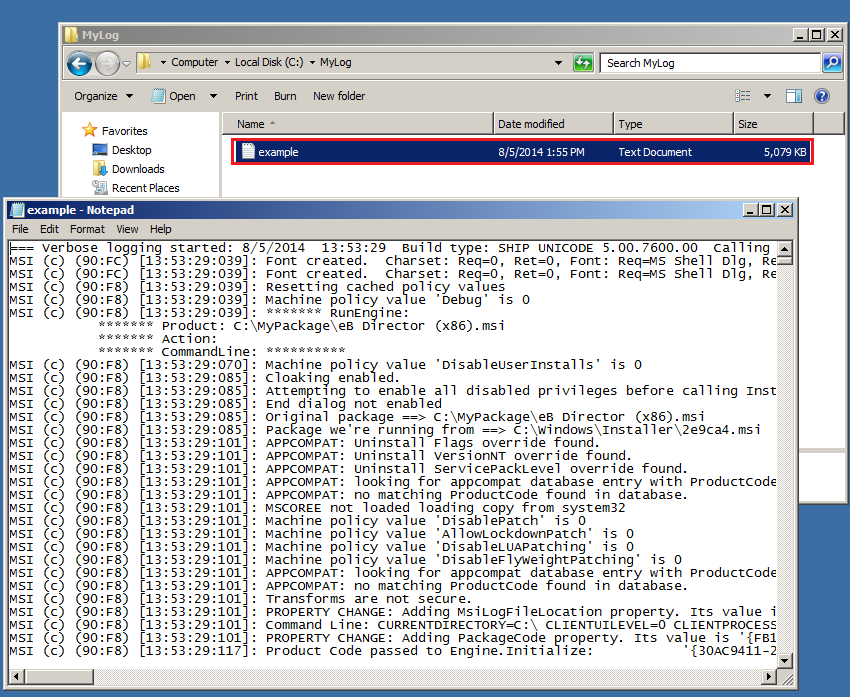
5. The /i parameter will launch the MSI package. After the installation is finished, the log is complete. Follow the installation wizard, after execution the file example.log appears in MyLog folder.
Last updated on